And it has been finally released! The Cumulative Flow Diagram (CFD) eBook is now available on...

Cumulative Flow Diagram book on Amazon.com
read more


And it has been finally released! The Cumulative Flow Diagram (CFD) eBook is now available on...

People who work with agile methods are used to visual kanban boards and how to manage them to...

The other day I went to a Japanese restaurant for a snack. Small order - Temaki I was very hungry and wanted something simple and fast. I ordered one temaki. Unfortunately, it took me more than 30 minutes to get my temaki. Needless to day, I left the restaurant...

“The average number of work items in a stable system is equal to their average completion rate, multiplied by their average time in the system.” ~ John Little, 1961 The text above is from "A Proof for the Queuing Formula" by Little, J. D. C. (1961). It is knows...
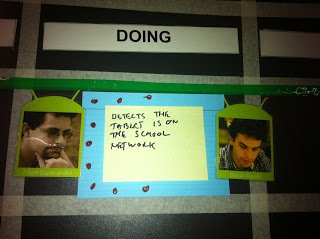
Lead time—the time elapsed from the work start to completion-- is important and is a key performance indicator (KPI) that every Agile team should track. Poor lead time causes bottlenecks in the team production flow, inefficiencies, delay costs, not to mention unhappy...
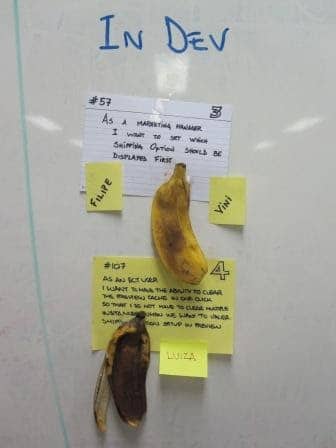
7 Ways To Track Lead-Time from paulocaroli Abstract: Measuring lead time is important and is a key performance indicator (KPI) that every Agile team should track. Poor lead time causes bottlenecks in the team production flow, inefficiencies, delay costs, not to...

In this blog post, the concepts of Little’s Law, lead time, cycle time, and throughput are explored through an analogy involving whisky bottles. Two problem statements concerning whisky consumption and purchases are presented, leading to the derivation of key parameters such as work in progress (WIP), throughput, cycle time, and lead time. The post offers two solutions that highlight the equivalence of the formulas employed, simplifying intricate concepts in queuing theory for readers. Additionally, the Cumulative Flow Diagram is introduced as an efficient tool for visualizing and managing work processes.
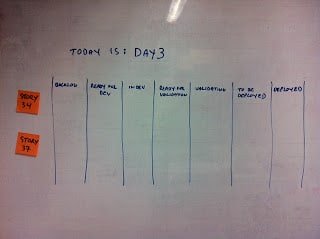
I have seen different definitions for lead time and cycle time in the Agile and Kanban communities (for SW development). From Lean manufacturing: lead time is the time between the initiation and delivery of a work item. cycle time is the time between two successive...