
You should move beyond the conventional method of dot voting to to prioritize topics on a retrospective or similar sessions. While dot voting offers simplicity and efficiency, it often leads to misunderstandings due to its binary nature. The article introduces three compelling alternatives: plus-minus voting, reactions filtering, and “Select One and Talk.” By embracing these diverse approaches, you can enhance engagement and gain deeper insights during retrospectives, fostering a more inclusive and enriching team growth experience.
I have a profound appreciation for retrospectives and similar workshops that contribute to team growth and improvement. Over the years, I’ve refined my skills as a facilitator, and during my early days, one technique consistently stood out as my go-to choice: dot voting. However, as time passed, I began to recognize that there are more effective alternatives to dot voting. In this article, I’ll introduce you to three compelling options that can significantly enhance your retrospective experience.
The Simplicity and Efficiency of Dot Voting
Dot voting is undeniably simple and efficient. It involves giving each participant three dots to place on cards, and the cards with the most votes become the focal points of the discussions. Dot voting serves as a practical means to prioritize topics when time is limited.
The Limitations of Dot Voting
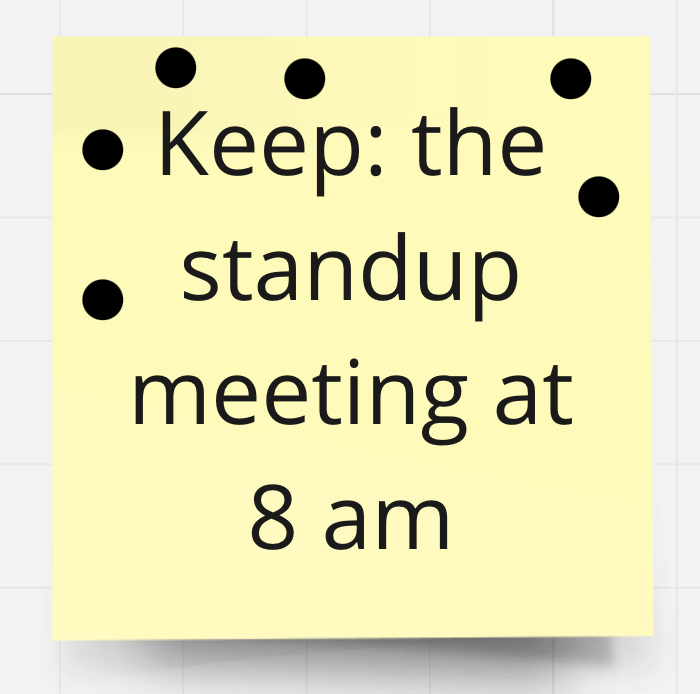
Nevertheless, dot voting comes with its limitations. Misunderstandings can easily arise as individuals may wrongly perceive a vote as an endorsement. For example, consider a note proposing to keep the 8 am standup meeting. You might place a dot on it because you wish to discuss it, not necessarily because you agree with it. However, the final tally might misleadingly suggest unanimous agreement. This is where alternative filtering methods prove invaluable.
Keep: the standup meeting at 8 am …… (6 votes)
The card above has received six dots. One might assume that six people are in agreement with keeping the standup meeting at 8 am. However, this assumption highlights the problem. Does the dot signify agreement or merely a desire to discuss? In our reality of limited time, this information can easily be lost or misinterpreted.
Option 1: Plus-Minus Voting: A Nuanced Approach
One promising alternative is plus-minus voting, which introduces a more nuanced perspective. Rather than a dot, participants use a plus sign if they agree with a note and a minus sign if they disagree. This change can unveil a spectrum of opinions that dot voting might obscure.
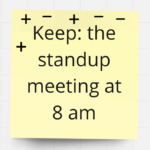
Keep: the standup meeting at 8 am ++-+– (6 votes)
The card above has received six votes. In this case, three people agree to keep the 8 am standup meeting, but three individuals disagree. As you can see, this simple shift from dots to plus and minus signs significantly alters the interpretation.
Option 2: Reactions Filtering: Adding Expressions and Fun
Why stop at plus-minus voting? Introduce reactions filtering to infuse your workshops with vibrancy and expression. Participants can use emojis like hearts, happy faces, sad faces, and thumbs up to convey their reactions. This enriches the interaction with notes and encourages participants to engage with one another’s ideas, potentially influencing the filtering process.
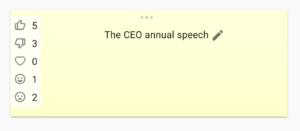
Sample Card with Mixed Emotions: “The CEO annual speech” received five thumbs up, three thumbs down, one happy face, and two sad faces.
Imagine a card that evokes a range of emotions, featuring five thumbs up, three thumbs down, one happy face, and two sad faces. This mosaic of reactions serves as a captivating conversation starter.
Option 3: Beyond Voting: “Select One and Talk”
There are instances where voting may not be the most suitable approach. In situations where you genuinely want to hear your team’s voices without solely relying on voting, consider the “Select One and Talk” filtering activity. Here, participants take turns selecting and discussing notes, ensuring that every voice is heard.
Have you ever been in a situation where you brought up the same item in retrospectives repeatedly, only for it to never garner enough votes for discussion?
I certainly have, and it can be demotivating. Democracy and voting aren’t flawless systems, especially when considering the individual’s perspective. Perhaps “select one and talk” addresses this issue, allowing each person to select what holds the most significance for them individually.
Embrace Diversity in Retrospectives
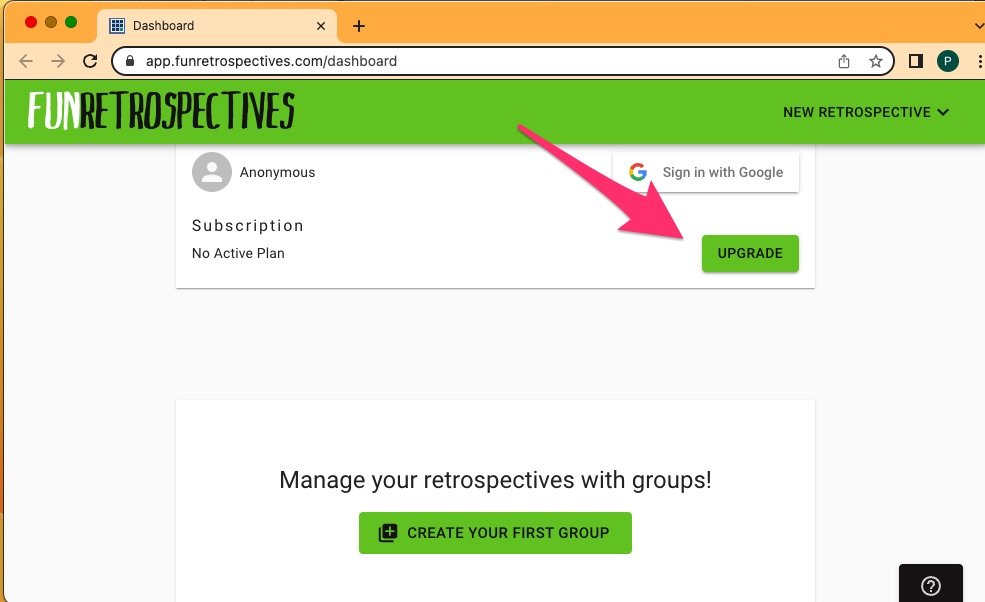
It’s time to break free from the confines of dot voting and explore other filtering options. While dot voting has its place, don’t resort to it automatically. Assess your workshop’s objectives and choose the filtering method that best aligns with your needs. For more filtering options, visit Funretrospectives.com/filtering. You’ll also appreciate the agenda builder at app.funretrospectives.com, where you can choose between dot voting, plus-minus voting, reaction filtering, and “select one and talk,” the filtering options presented in this article.
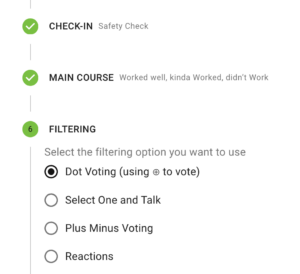
agenda builder on app.funretrospectives.com,
Keep conducting amazing, effective, and fun retrospectives! Your teams will undoubtedly benefit from the enhanced engagement and deeper insights offered by these alternative filtering techniques.