Team calendar

TAG:

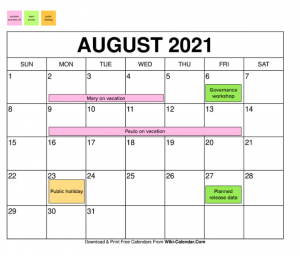
Team calendar is a simple and visual way for a team to share their planned events for a given period.  Teams typically use it to share vacation plans, important events and deadlines.
Step by Step

  1. Decide the calendar period
  2. Decide what kind of events the team should add to the calendar (e.g., vacation and time-off, important team events, etc.)
  3. Ask everyone to add events to the calendar

Organising the team events is essencial for a successful engagement. By using the team calendar, you eliminate the time spent going back-and-forth with everyone involved, trying to coordinate the personal needs. The team calendar improves the team communication and alignment as per their important events.

>> This content is part of a series on inception activities.

Paulo Caroli

Paulo Caroli is an author, speaker, and consultant specializing in agile transformations, Lean Inception, and OKRs. With over 30 years of experience—including nearly a decade in Silicon Valley and 18 years at ThoughtWorks—he has helped organizations transition from project to product and from strategy to execution. Creator of the Lean Inception methodology and author of bestselling books like Lean Inception and Team OKR, Paulo is dedicated to empowering teams to align, validate, and deliver real business value.
Team Architecture Redesign

Team Architecture Redesign

The "Team Architecture Redesign" activity is a structured process designed to help teams critically assess and revamp their current structures. It's an opportunity to compare different organizational frameworks, ultimately choosing the most fitting structure and...

read more
Process flowchart diagram

Process flowchart diagram

A Process Flowchart Diagram helps teams visualize how work flows across a process — from start to finish. Using simple shapes like boxes, diamonds, and arrows, it clarifies each action and decision point, revealing inefficiencies and opportunities for improvement. When created collaboratively, a flowchart becomes a shared tool for alignment, clarity, and continuous improvement.

read more

Pin It on Pinterest