Splitting CRUD stories

Two of my colleagues came across a CRUD (Create / Read / Update / Delete) story, and asked me for advice on how to convince people on splitting stories.

crud

I typically prefer to have smaller stories. In this case, instead of having one CRUD story, I would have one for Read, another for Create/Update and a story for Delete.

Here is an example.

As a online store owner, I want to Create / Read / Update / Delete products so that I can offer my customers the top rated products

Instead of having this CRUD story, I split it like this (I will add a few sample tasks for making it more illustrative):

As a online store owner, I want to Read (view) my products so that I can review what is current available on my site

Sample tasks:

  • Create DB table
  • Populate table with a few sample data
  • Create select DB script
  • Create for viewing my products
  • Create automated functional tests for viewing functionality


As a online store owner, I want to Create / Update a product so that I can offer my customers the top rated products

Sample tasks:

  • Create insert / update DB script
  • Create UI for create / update a product
  • Create automated functional tests for adding product functionality
  • Create automated functional tests for updating product functionality


As a online store owner, I want to Delete a product so that I can offer my customers the top rated products


Sample tasks:

Create DB table for deleted products

  • Create delete DB operation
  • Create UI for deleting a product
  • Create automated functional tests for the delete functionality

This sample is very specific for CRUD stories. There are other ways for splitting stories.

Mike Cohn’s book, User Stories Applied is a must read on this subject.

Splitting (or deciding the size of a story) is controversial. Mike Cohn have popularized the INVEST acronym: Independent. Negotiable. Valuable. Estimatable. Sized appropriately. Testable

agree with the S in the acronym listed above: Sized appropriately.

But when I first read the INVEST acronym, the S was for small. I know Sized appropriately is not very specific, but it is more realistic. It is not about being small; it is about being sized appropriately. For this consider several reasoning on splitting your stories. The links below have more on this subject:

https://lassekoskela.com/thoughts/7/ways-to-split-user-stories/

https://agilecoach.typepad.com/agile-coaching/2010/09/ideas-for-slicing-user-stories.html
https://xp123.com/xplor/xp0512/index.shtml

Paulo Caroli

Paulo Caroli is an author, speaker, and consultant specializing in agile transformations, Lean Inception, and OKRs. With over 30 years of experience—including nearly a decade in Silicon Valley and 18 years at ThoughtWorks—he has helped organizations transition from project to product and from strategy to execution. Creator of the Lean Inception methodology and author of bestselling books like Lean Inception and Team OKR, Paulo is dedicated to empowering teams to align, validate, and deliver real business value.
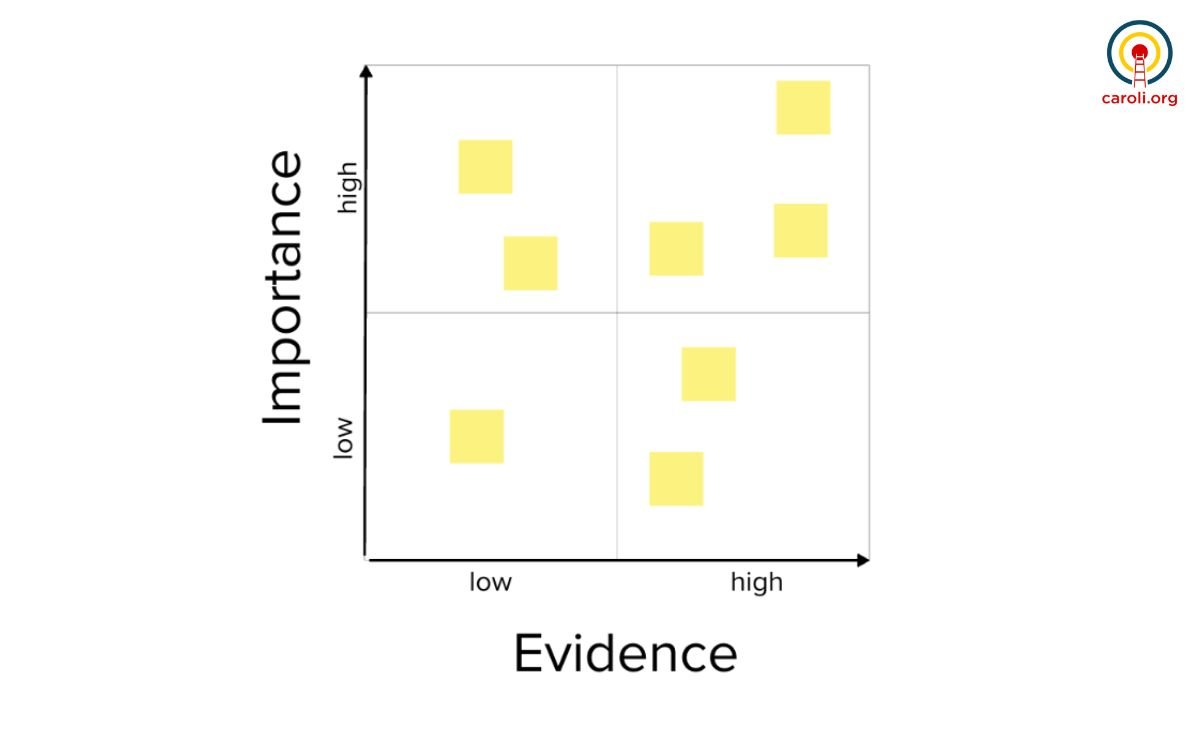
Assumption Mapping Activity

Assumption Mapping Activity

Assumption mapping is a powerful activity that equips teams to evaluate their assumptions based on their significance and supporting evidence. By following a structured process, teams can clarify their assumptions, enabling well-informed decisions, mitigating risks, and bolstering the likelihood of success in their endeavors.

read more
Design Ahead: Harmonizing Design and Development Timelines for Optimal Results

Design Ahead: Harmonizing Design and Development Timelines for Optimal Results

This article explores the strategic integration of the Design Ahead approach and dual track development methodologies in the realm of software development. By delving into the nuances of design, concurrent workflows, and seamless collaboration, it offers insights into orchestrating a harmonious symphony between design and implementation. From refining user experiences to developing new features, this exploration illuminates the path for organizations seeking to excel in the ever-evolving landscape of software delivery.

read more
Working Backwards – Press Release Template

Working Backwards – Press Release Template

This comprehensive Press Release template provides a structured framework for implementing the innovative Working Backwards approach, a strategy favored by industry leaders like Amazon. By starting with the end customer experience and working backward, this method offers a clear pathway for product development and planning. The template’s sections guide teams in articulating the product/initiative/solution’s significance, key features, and benefits.  Whether for remote collaboration or in-person workshops, this tool equips teams with a collaborative framework to craft impactful press releases.

read more

Pin It on Pinterest