
Assumption mapping is an activity empowering teams to evaluate assumptions based on their significance and the supporting evidence. This strategic process allows teams to clarify their assumptions before proceeding, facilitating informed choices, reducing risks, and enhancing the likelihood of success in their endeavors.
Step by step:
- Define the Main Idea/Endeavor: Clearly outline the core concept or project under consideration. For example: Improve the check-out experience to increase our e-commerce sales.
- Present the Assumption Template: Introduce the Assumption Definition Template to participants, providing a structured framework for their assumptions.
- Capture Assumptions: Ask participants to document their assumptions using the provided template, ensuring individual clarity and articulation of their beliefs.
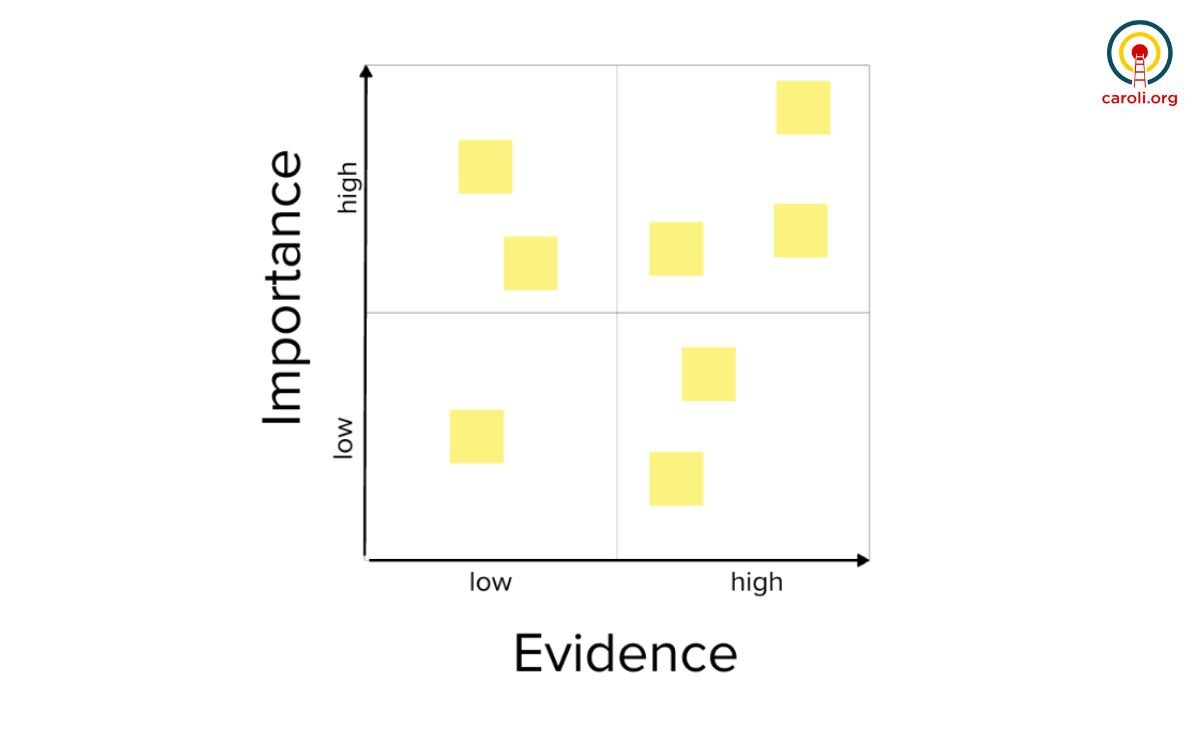
- Explain the Importance vs. Evidence Matrix: Tis matrix guides the team’s understanding of the assumptions based on importance (low, high) and evidence levels (low, high).
- Place Assumptions on the Matrix: Ask the participants to position their assumptions on the Importance vs. Evidence Matrix, visually representing their beliefs in a structured manner.
- Facilitate Conversations and Next Steps: With assumptions visible on the matrix, teams engage in meaningful discussions, prioritizing critical assumptions and deciding on the next steps. These steps may include efforts to gather more evidence for high-importance, low-evidence assumptions or prioritizing testing based on importance and existing evidence.

Assumption mapping activity: Importance vs. Evidence Matrix
Assumption Mapping Benefits
Here are the main benefits for using the Assumption Mapping activity with your team:
- Identify Riskiest Assumptions: Pinpoint high-importance, low-evidence assumptions critical to success, prompting teams to focus efforts on validating them.
- Prioritize Assumptions: Determine which assumptions to test first, considering both importance and available evidence, guiding teams in their testing strategies.
- Evaluate Assumptions for Discard: Open dialogue on low-importance, low-evidence assumptions, making informed decisions on whether to retain or discard them from the project scope.
Assumption Definition Template

assumption definition template
I use the following template for defining an assumption:
Assumption Statement: [State the assumption clearly and concisely]
How to Test it: [Describe the method to test this assumption]
Success Criteria: [Define the criteria that validate the assumption test]
Assumption Example:
Main Idea/Endeavor: Improve the check-out experience to increase our e-commerce sales.
Assumption Statement: Users will find the new “Add to Cart” button easily accessible and use it for purchases in our e-commerce app prototype.
How to Test it: Create a clickable prototype, instruct users to locate a specific product and add it to their cart. Observe their interactions, focusing on the speed and ease of locating and using the button.
Success Criteria: Users successfully find and use the new “Add to Cart” button within a timeframe shorter than the current process, indicating improved usability.
This activity is rooted in the principles outlined in David Bland and Alexander Osterwalder´s book, Testing Business Ideas: A Field Guide for Rapid Experimentation. By employing assumption mapping, teams can make informed choices, reducing risks and enhancing the chances of success in their endeavors.
This post is part of a series of posts on inception related activities.