[Digital products] NPS: What is it? How to calculate it? How often should you measure it?

NPS (short for Net Promoter Score) came up for the first time in 2003, in a Harvard Business Review article written by Fred Reichheld, consultant at Bain & Company, a renowned American company. In 2006, Reichhel wrote a book called The Ultimate Question that had a second edition published in 2011, containing the lessons learned through the years.

NPS is calculated based on a single question you should ask your client:

In a scale from 0 to 10, how likely would you tell a friend or colleague about us?

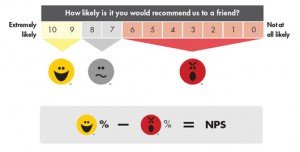
Zero meaning absolutely not, and 10 meaning absolutely yes. People who evaluated from zero to 6 must be classified as detractors; the ones who graded 7 or 8 must be classified as neutral; and the ones who graded 9 or 10 are promoters.
nps-measure-of-success

The NPS calculation is very simple, just subtract the detractors’ percentage from the promoters’ percentage. The result is a number varying from -100% to 100%. A negative number means that you have more detractors than promoters, and a positive number means the opposite, that is, you have more promoters than detractors.

Of course, it´s better to have more promoters than detractors, mainly if we think about the word of mouth marketing that comes from both detractors or promoters. Aside of talking your company and services up to their friends, the promoters buy more and are costumers for longer. That is, they like your product or service, and will always give you ideas and suggestions that are important to your business.

Several companies use NPS to measure their clients’ satisfaction and loyalty. Some examples are Apple, Zappos, Rackspace, Microsoft, Intuit and Facebook.

However, how often should you measure NPS? Once a year? Every semester? Every month? Every week? The book recommends to measure it everyday, continuously. That can be done in the following way: everyday you ask the NPS question to clients who are celebrating the X-months or X-years anniversary that day.

For instance, you can ask your clients when they complete 1 month since they have become your clients, then you can pick up some on-boarding issue. You can also ask your 6-months clients and, from thereon, at each 1-year anniversary at the company. This way you can get NPS reports per time the client is your client, then you will know if your treating well both new and old clients. To check if your NPS is evolving, you take the moving average from the last 30 days.

[content_block id=2967 slug=read-more-on-the-ebook-porduct-management]


Paulo Caroli

Paulo Caroli is an author, speaker, and consultant specializing in agile transformations, Lean Inception, and OKRs. With over 30 years of experience—including nearly a decade in Silicon Valley and 18 years at ThoughtWorks—he has helped organizations transition from project to product and from strategy to execution. Creator of the Lean Inception methodology and author of bestselling books like Lean Inception and Team OKR, Paulo is dedicated to empowering teams to align, validate, and deliver real business value.
Triple Track Development: Business Innovation Through Continuous Discovery and Continuous Delivery

Triple Track Development: Business Innovation Through Continuous Discovery and Continuous Delivery

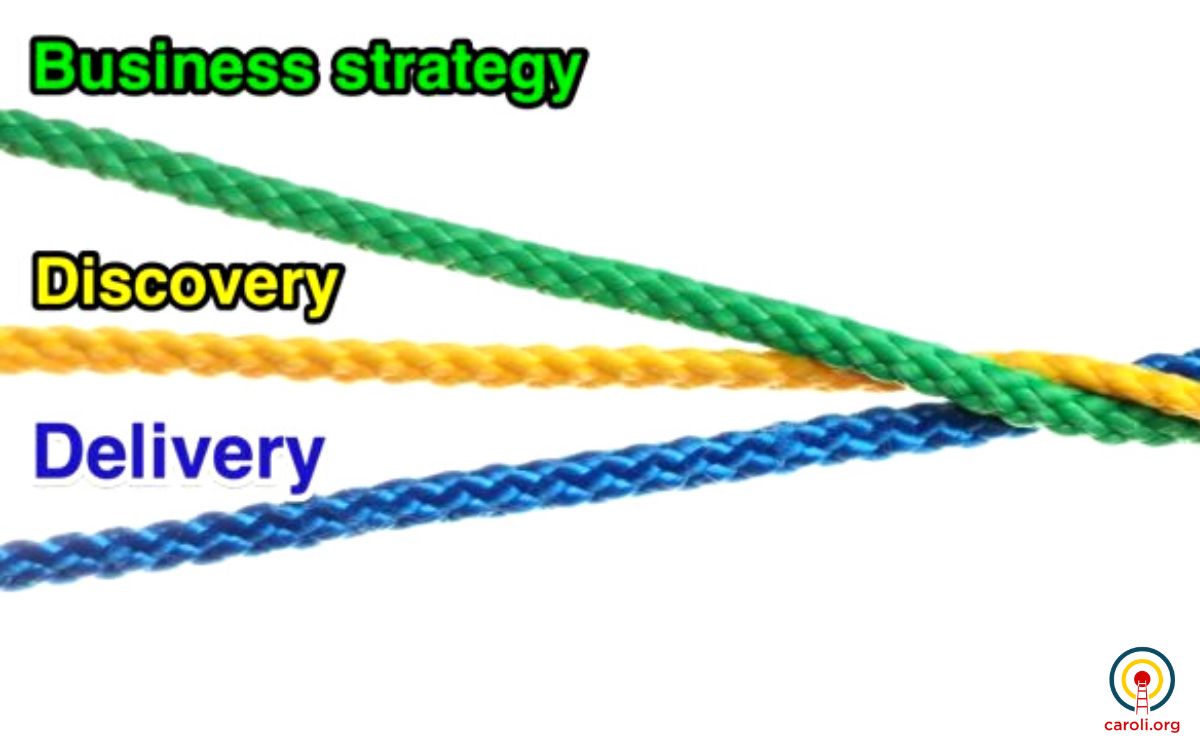
Continuous Triple Track Development, comprising Business Strategy, Discovery, and Delivery, revolutionizes product development. Quarterly goals replace yearly plans, ensuring adaptability. Continuous Discovery delves deep into user needs, while Continuous Delivery swiftly transforms validated ideas into products. This synchronized approach fosters unprecedented collaboration, propelling teams towards collective success. It’s not just a methodology; it’s a strategic advantage, enabling businesses to innovate rapidly in today’s dynamic market.

read more
New Book Alert: How to Define, Prioritize and Refine User Stories using the Product Backlog Building Canvas

New Book Alert: How to Define, Prioritize and Refine User Stories using the Product Backlog Building Canvas

Introducing our enhanced book, “How to Define, Prioritize and Refine User Stories using the Product Backlog Building Canvas.” Evolving from its predecessor, this edition responds to valuable reader feedback, refining both content and title. Delve into the world of effective product development and user story management, discovering the integrated power of the PBB Canvas. Embrace an enriched reading experience and explore insights from thought leader Jeff Gothelf in the preface. Don’t miss a reader’s insightful review, preserved for wider readership. Join us on this journey of empowering user story craftsmanship, and witness the transformation of your product development goals.

read more
Product thinking strategy questionnaire

Product thinking strategy questionnaire

The questionnaire below elaborates on a few important aspects of product thinking, problem understanding, solutioning and strategic delivery planning.   I have used this questionnaire as part of a workshop on Product Leadership and Strategic Alignment. Basically,...

read more

Pin It on Pinterest