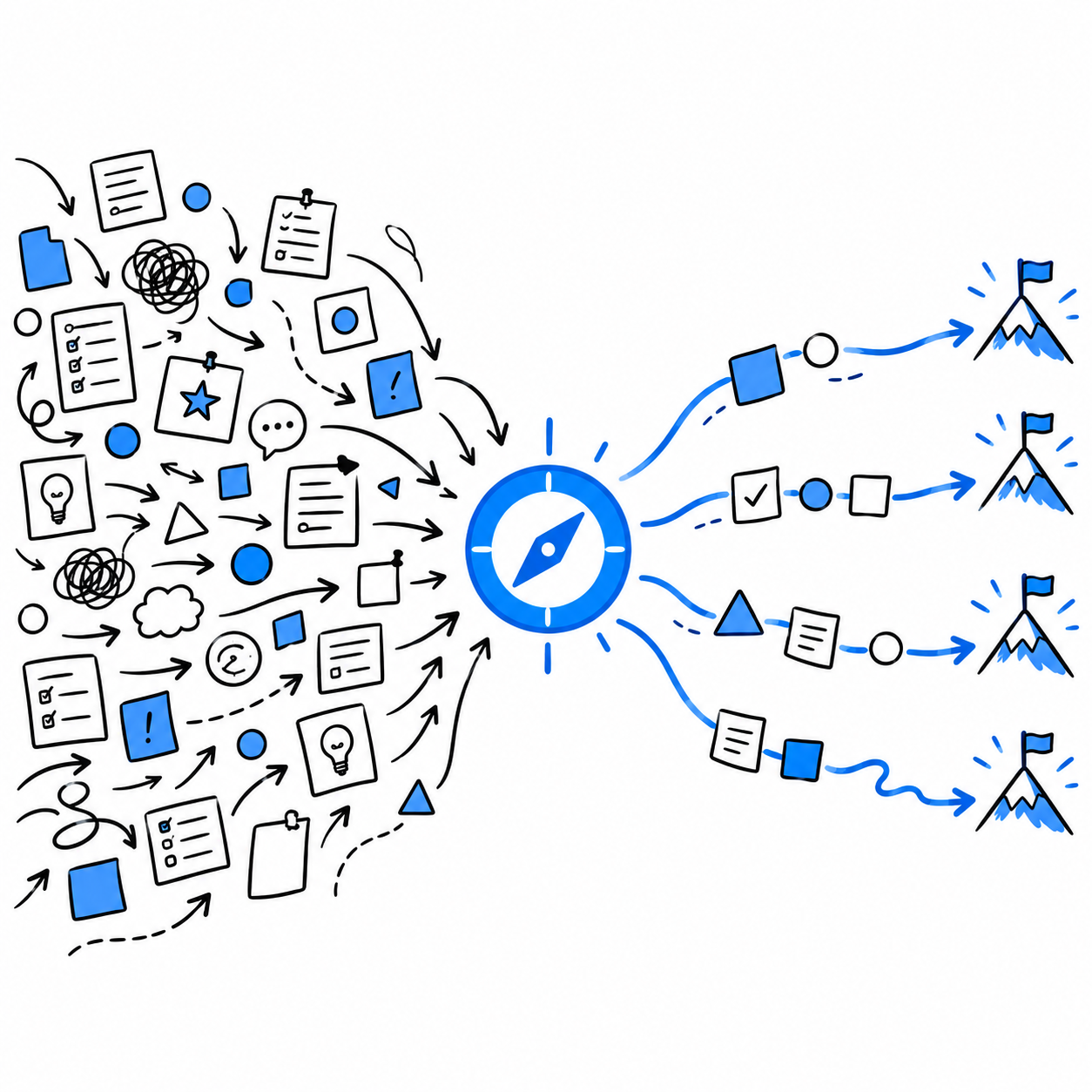
What changes when an organization moves from demand-driven work to objective-led decisions? Learn how objectives can guide priorities, team autonomy, initiatives, and outcomes.
Category
Most Read Articles
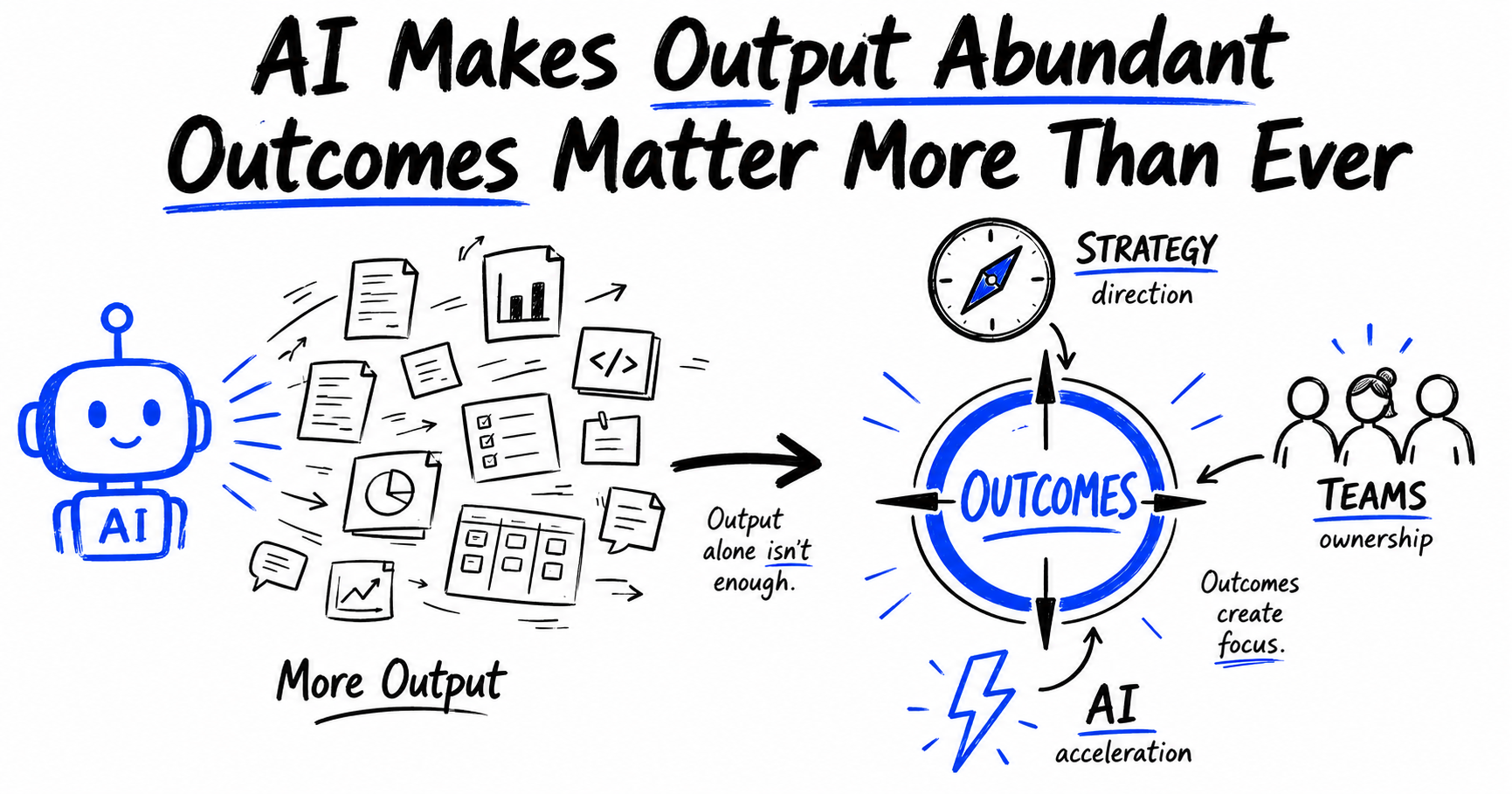
AI Makes Output Abundant: Why Outcomes Matter More Than Ever
AI makes output faster, cheaper, and more abundant. Discover why outcomes should guide product teams, organizational design, and AI-enabled work.
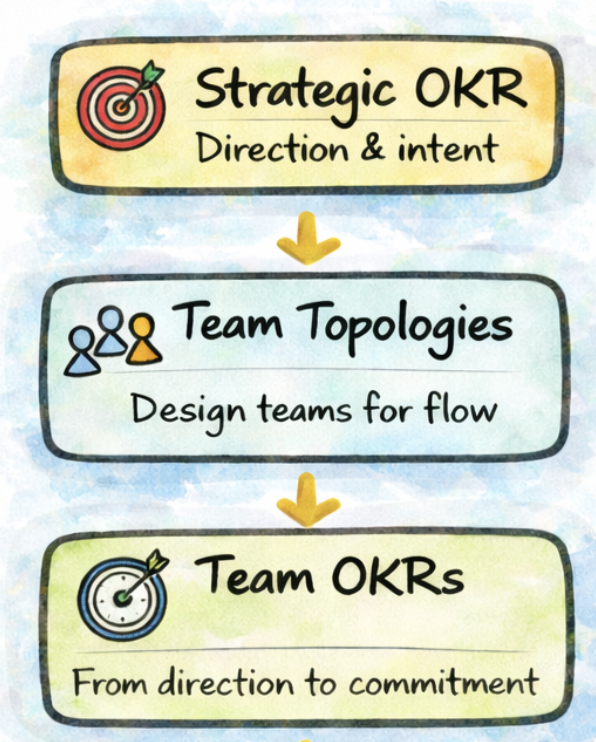
From Strategy to Outcomes: The Missing System Behind Empowered Teams
Strategy to outcomes: a practical model connecting Strategic OKRs, Team Topologies, discovery, and delivery to help empowered teams turn strategy into measurable results.
OKR vs. MVP: How to Connect Strategy and Execution in Practice
OKR gives direction; MVP validates the path.
This article shows how teams can connect strategy and execution through a simple, powerful cycle of outcomes, hypotheses, and real learning.
Guiding Data Mesh Lean Transformations: A Full Workshop Facilitation Example
Facilitating a Data Mesh Lean Transformation requires structured collaboration, clear facilitation strategies, and alignment between business and technical teams. This guide follows the Double Diamond Approach, a framework that balances problem exploration with solution execution, providing a step-by-step walkthrough of key workshops—from selecting the right domain to defining thin slices and incremental delivery plans. With real-world examples and ready-to-use Mural boards, this article equips facilitators with the tools to drive alignment, execution, and lasting impact in Data Mesh transformations.
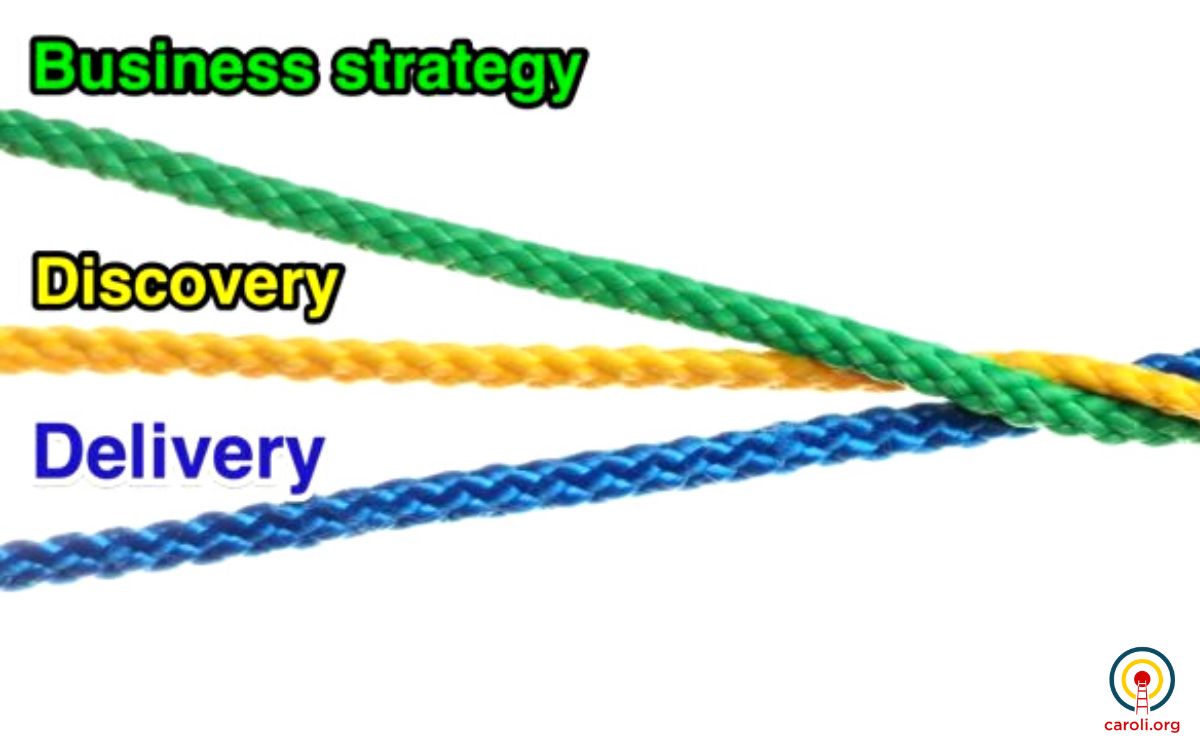
Triple Track Development: Business Innovation Through Continuous Discovery and Continuous Delivery
Continuous Triple Track Development, comprising Business Strategy, Discovery, and Delivery, revolutionizes product development. Quarterly goals replace yearly plans, ensuring adaptability. Continuous Discovery delves deep into user needs, while Continuous Delivery swiftly transforms validated ideas into products. This synchronized approach fosters unprecedented collaboration, propelling teams towards collective success. It’s not just a methodology; it’s a strategic advantage, enabling businesses to innovate rapidly in today’s dynamic market.
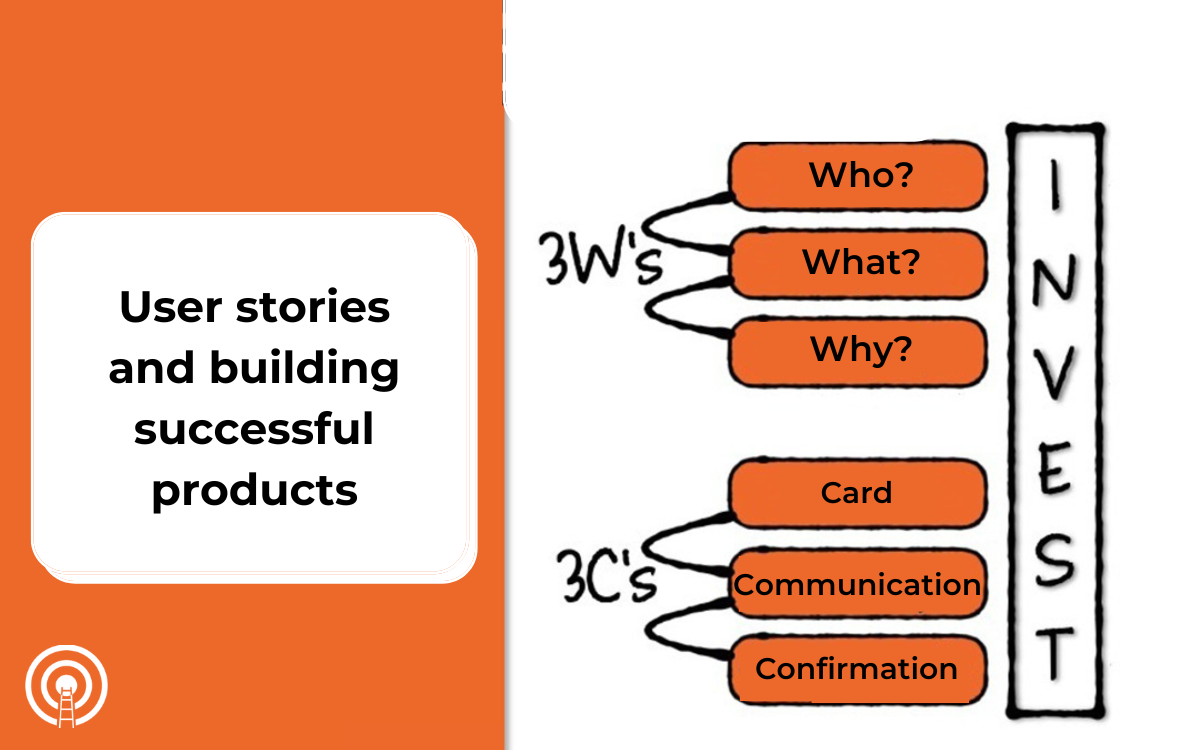
Writing User Stories and building successful products
Knowing the real needs of users and developing features consistent with this reality are key factors in building successful products. In this article, you will see more details on this topic, especially regarding techniques for writing quality and assertive User Stories, examples and other related topics, which are also brought up in the book Product Backlog Building (PBB), by the authors Paulo Caroli and Fábio Aguiar.
Lean Inception: Learn How to Align People and Build the Right Product
Lean Inception is a crucial agile methodology for aligning teams on effective product creation. Introduced by Paulo Caroli, it combines Design Thinking and Lean StartUp techniques to define strategies and Minimum Viable Product (MVP) scope. It is valuable for large projects, startups, and business innovations. Not suitable for discovery activities, prototyping decisions, or cross-team alignment. Active participants, stakeholders, and skilled facilitators are essential for the success of this collaborative process. Lean Inception is fundamental for guiding teams toward meaningful and efficient product outcomes.