



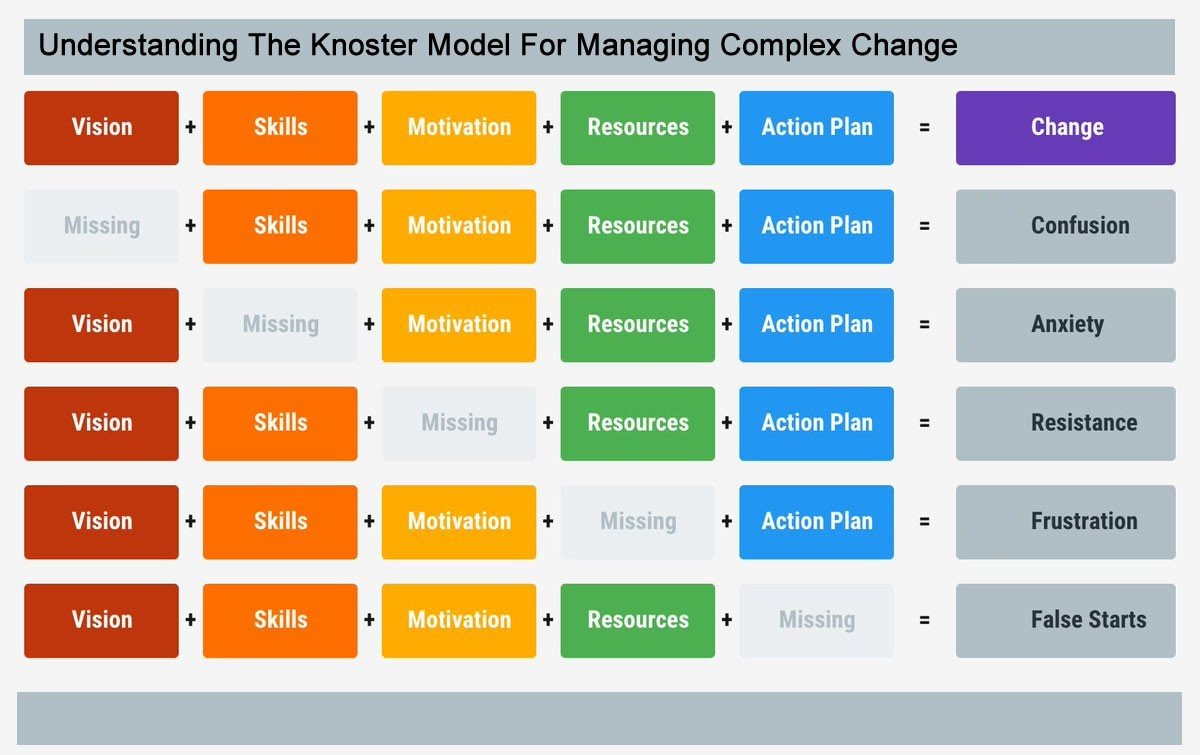

Organizational transformation is a complex journey that requires a structured approach to manage effectively. The Knoster Model for Transformation and Change provides a comprehensive framework to navigate this journey, emphasizing six critical aspects: Vision, Skills, Incentives, Resources, and Action Plan. While each element plays a vital role, the integration of Lean Inception can significantly enhance the transformation process by addressing two of these aspects—Vision, and Action Plan—early and effectively.
The Knoster Model Explained
The Knoster Model outlines six essential components needed for successful transformation and change within organizations:
- Vision: A clear and compelling direction.
- Skills: Necessary competencies and knowledge.
- Incentives: Motivations and rewards to drive change.
- Resources: Adequate financial, human, and material support.
- Action Plan: A detailed roadmap for achieving the vision.

Knoster model (image by Jill Romford from the article onhttps://agilityportal.io/blog/knoster-model-for-change
Lean Inception: Helping the Transformation
Lean Inception, the effective combination of Design Thinking and Lean StartUp, is designed to align teams and streamline the product development process. It plays a pivotal role in shaping transformation by directly impacting Vision, and Action Plan, two key aspects of the Knoster Model.
Vision: Setting the Direction
The very first activity in a Lean Inception workshop is defining the product vision. This activity helps teams establish a clear, unified understanding of the project’s goals and objectives. By collaboratively creating a vision, teams ensure that everyone is aligned and motivated towards a common goal.
- Product Vision Activity: Facilitates a shared understanding of the product’s purpose and the problems it aims to solve.
- Outcome: A clear and compelling vision that guides all subsequent activities and decisions.
Action Plan: Creating a Roadmap
One of the core outputs of a Lean Inception workshop is the MVP (Minimum Viable Product) Canvas. This tool helps teams lay out a clear action plan for developing and validating the initial product concept. The MVP Canvas defines the minimum set of features needed to start testing the product with users and gather valuable feedback.
- MVP Canvas: Details the essential features, user journeys, and metrics for validating the product.
- Outcome: A concrete, actionable plan that sets the project on a clear path towards its vision.
Beyond Lean Inception: Addressing the Remaining Aspects
While Lean Inception covers Vision and Action Plan, the other aspects of the Knoster Model—Skills, Incentives, and Resources—should also be addressed to ensure a successful transformation.
Skills: Ensuring Competency
It’s crucial to ensure that participants in the Lean Inception workshop have the necessary skills to carry the project forward. This involves selecting the right people and providing any needed training beforehand. Avoiding the mistake of having one group conduct the Lean Inception and another group implement the results ensures continuity and commitment.
Incentives: Motivating the Team
Incentives and motivation are vital for maintaining momentum throughout the transformation. This can be managed before or after the Lean Inception workshop, ensuring that team members are motivated and rewarded for their contributions.
Resources: Securing Support
Before scheduling a Lean Inception, ensure that all necessary resources—financial, human, and material—are available. Without these, the workshop and subsequent implementation may face significant hurdles.
Conclusion
Lean Inception is not a silver bullet but a powerful addition to any organization’s transformation toolbox. By effectively addressing Vision and Action Plan, Lean Inception sets a strong foundation for successful change. Coupled with careful attention to Skills, Incentives, and Resources, organizations can navigate their transformation journey more effectively and achieve sustainable success.