User Stories and Business Hypothesis


As I find myself diving deeper into the Lean Start up and the Lean Analytics world, I start questioning some of the Agile practices that been  have followed me on every single Agile project I worked on. For instance: the User Story. 


As a < type of user >,
I want < some goal >
so that < some reason >.


This User Story format was created by Mike Cohn years ago [Users Stories Applied], and ever since it has used by many Agile teams. Typically, a Product Backlog has a list of User Stories to be worked on.


Nevertheless there is another kind of work which Lean enthusiastic are bringing to everyone’s attention:  hypothesis.


Hypothesisis a supposition or proposed explanation made on the basis of limited evidence as a starting point for further investigation.


I have learned the following representation from Alison Vale and Rodrigode Toledo.


Basically I was seeking a better template for a hypothesis. The User Story format was not working for this one. I need a good format to describe the ?, the -> and the ! – my hypothesis, the work needed in order to get this hypothesis in play, and the way to validate the results.


So here is my recommendation for a simple and generic hypothesis format:


If < I do this > then < this will happen >


I am currently calling these Business Hypothesis (please share if you have a better name for it). It includes the ?, the -> and the !; being the ? and the ! explicitly on the text, and  the -> should be handled as details for that hypothesis. This is similarly to User Stories, where the implementation details are not contemplated on the format as a… I want to… so that…


This has been working well for the teams I worked with. Please share your experience with hypothesis. Has this or other formats worked well for you?
 

Paulo Caroli

Paulo Caroli is an author, speaker, and consultant specializing in agile transformations, Lean Inception, and OKRs. With over 30 years of experience—including nearly a decade in Silicon Valley and 18 years at ThoughtWorks—he has helped organizations transition from project to product and from strategy to execution. Creator of the Lean Inception methodology and author of bestselling books like Lean Inception and Team OKR, Paulo is dedicated to empowering teams to align, validate, and deliver real business value.
Assumption Mapping Activity

Assumption Mapping Activity

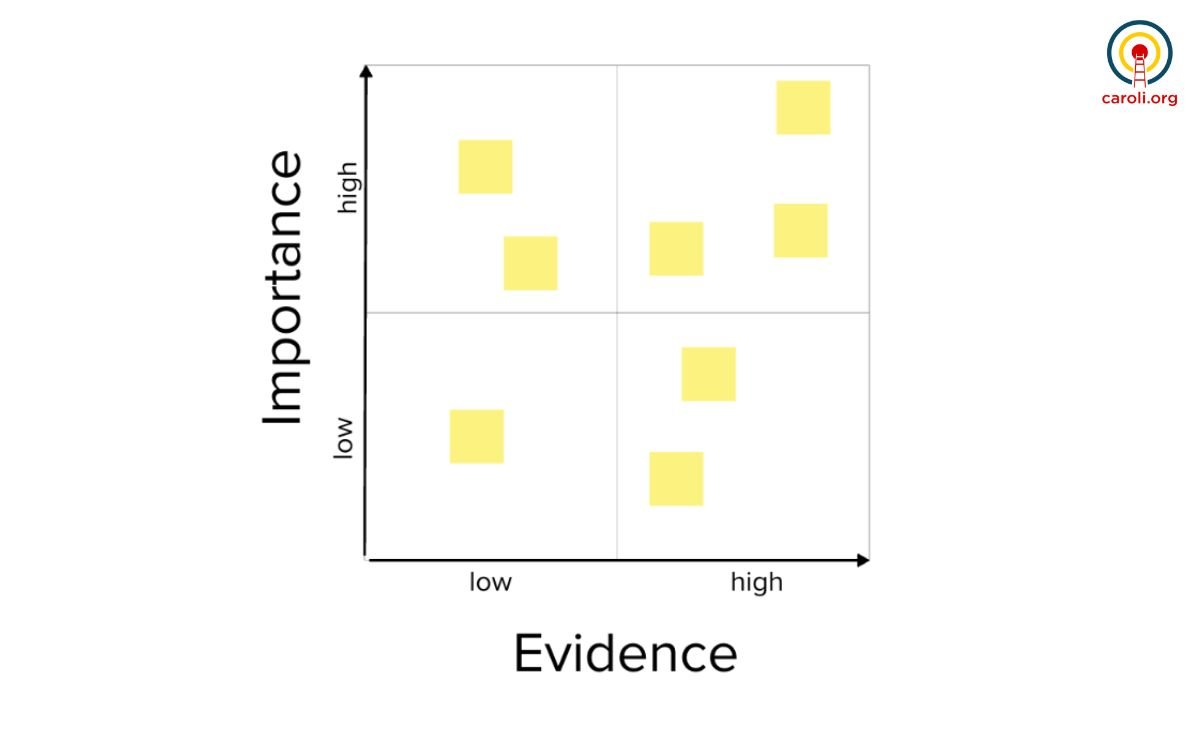
Assumption mapping is a powerful activity that equips teams to evaluate their assumptions based on their significance and supporting evidence. By following a structured process, teams can clarify their assumptions, enabling well-informed decisions, mitigating risks, and bolstering the likelihood of success in their endeavors.

read more
Design Ahead: Harmonizing Design and Development Timelines for Optimal Results

Design Ahead: Harmonizing Design and Development Timelines for Optimal Results

This article explores the strategic integration of the Design Ahead approach and dual track development methodologies in the realm of software development. By delving into the nuances of design, concurrent workflows, and seamless collaboration, it offers insights into orchestrating a harmonious symphony between design and implementation. From refining user experiences to developing new features, this exploration illuminates the path for organizations seeking to excel in the ever-evolving landscape of software delivery.

read more
Working Backwards – Press Release Template

Working Backwards – Press Release Template

This comprehensive Press Release template provides a structured framework for implementing the innovative Working Backwards approach, a strategy favored by industry leaders like Amazon. By starting with the end customer experience and working backward, this method offers a clear pathway for product development and planning. The template’s sections guide teams in articulating the product/initiative/solution’s significance, key features, and benefits.  Whether for remote collaboration or in-person workshops, this tool equips teams with a collaborative framework to craft impactful press releases.

read more

Pin It on Pinterest