[Digital Products] What is CAC, LT and LTV?

TAG:

CAC is the Customer Acquisition Cost. It is the sum of the associated costs with finding and getting the attention of potential clients, and bringing them to your site, converting them into users of your web product and later, into a paying user. For example, imagine that you have only invested on Google AdWords and, on a given month, you have spent $1,000 and got 10 new clients in that month. Dividing $ 1,000 per 10, you’ll have a CAC of $100. That is, your cost for getting each client is $100.

LT is the Lifetime of your client. That is, how long on average a client is your client. This number only makes sense when you have a recurrent revenue stream. Using the previous example, let’s imagine that the LT of clients you have acquired is 20 months.

LTV is the Lifetime Value, or the value of a client while he stays as your client. It’s the revenue this client generates while still your client. Following the previous example, let’s imagine this client generates monthly revenue of $8. Multiplying the LT of 20 months by the $8 per month, gives us an LTV of $160.

In these definitions, it´s easy to see that your product will be as profitable as higher is the LT and the LTV, and that you need your LTV higher than your CAC.

In this example, we have an LTV of $ 160 and a CAC of $100, which shows that we have a profitable situation. It is necessary to follow up closely these numbers, month by month. If in a given month the LTV continues on $160 and the CAC goes up to more than $160, it’s necessary to review the client acquisition efforts. Also, you should study ways to increase the LTV, augmenting the LT and/or augmenting the monthly value.

[content_block id=2967 slug=read-more-on-the-ebook-porduct-management]
Paulo Caroli

Paulo Caroli is an author, speaker, and consultant specializing in agile transformations, Lean Inception, and OKRs. With over 30 years of experience—including nearly a decade in Silicon Valley and 18 years at ThoughtWorks—he has helped organizations transition from project to product and from strategy to execution. Creator of the Lean Inception methodology and author of bestselling books like Lean Inception and Team OKR, Paulo is dedicated to empowering teams to align, validate, and deliver real business value.
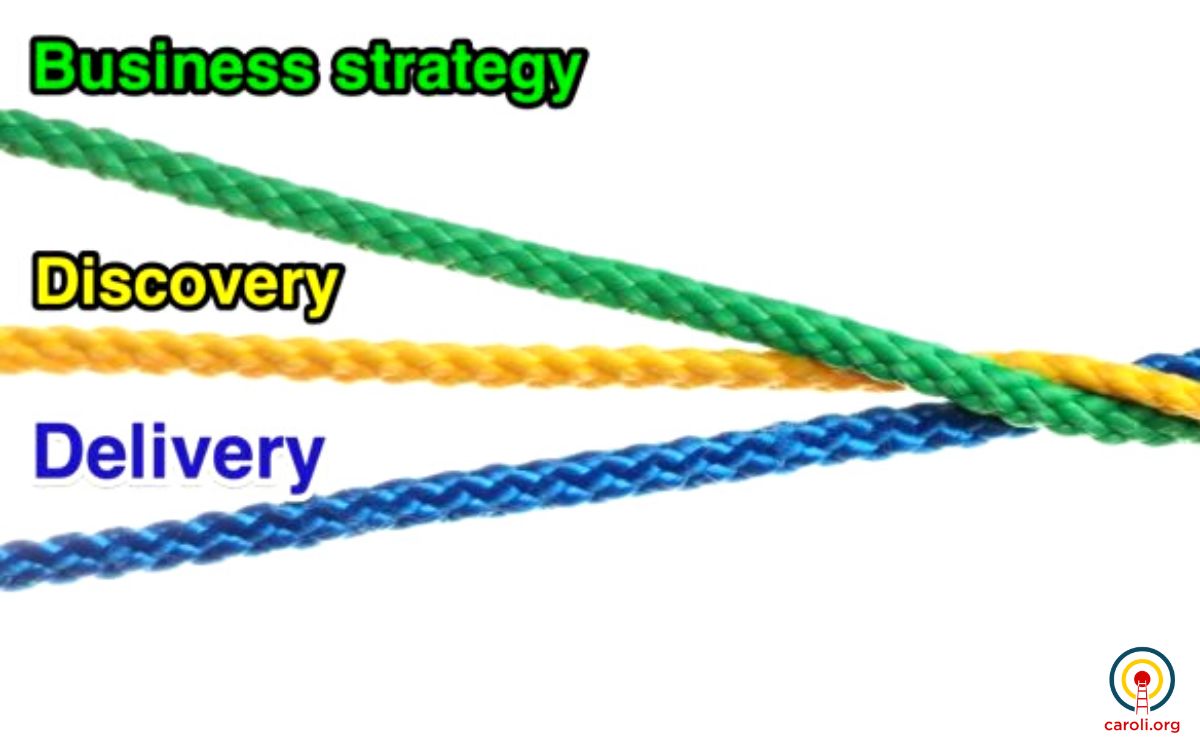
Triple Track Development: Business Innovation Through Continuous Discovery and Continuous Delivery

Triple Track Development: Business Innovation Through Continuous Discovery and Continuous Delivery

Continuous Triple Track Development, comprising Business Strategy, Discovery, and Delivery, revolutionizes product development. Quarterly goals replace yearly plans, ensuring adaptability. Continuous Discovery delves deep into user needs, while Continuous Delivery swiftly transforms validated ideas into products. This synchronized approach fosters unprecedented collaboration, propelling teams towards collective success. It’s not just a methodology; it’s a strategic advantage, enabling businesses to innovate rapidly in today’s dynamic market.

read more
New Book Alert: How to Define, Prioritize and Refine User Stories using the Product Backlog Building Canvas

New Book Alert: How to Define, Prioritize and Refine User Stories using the Product Backlog Building Canvas

Introducing our enhanced book, “How to Define, Prioritize and Refine User Stories using the Product Backlog Building Canvas.” Evolving from its predecessor, this edition responds to valuable reader feedback, refining both content and title. Delve into the world of effective product development and user story management, discovering the integrated power of the PBB Canvas. Embrace an enriched reading experience and explore insights from thought leader Jeff Gothelf in the preface. Don’t miss a reader’s insightful review, preserved for wider readership. Join us on this journey of empowering user story craftsmanship, and witness the transformation of your product development goals.

read more
Product thinking strategy questionnaire

Product thinking strategy questionnaire

The questionnaire below elaborates on a few important aspects of product thinking, problem understanding, solutioning and strategic delivery planning.   I have used this questionnaire as part of a workshop on Product Leadership and Strategic Alignment. Basically,...

read more

Pin It on Pinterest