Caroli.org has just released the State of Lean Inception Report 2024, presenting insights into how this methodology is being applied across organizations and teams worldwide. The study builds on years of practice since Lean Inception was first introduced in Brazil in 2014. It offers a deep dive into Lean Inception’s growing impact, highlighting its role in modern product development and agile transformations.
Why the State of Lean Inception Report?
Lean Inception, a process designed to align teams and define a Minimum Viable Product (MVP), is grounded in principles of Design Thinking and Lean Startup. Its core strength lies in its ability to bring different roles—ranging from stakeholders to developers—together in a structured set of workshops that help teams converge on a shared vision of what to build and why.
Our intent with this report was to examine how Lean Inception has evolved since its inception and provide a snapshot of its adoption in Brazil. With the growing demand for agile product development methodologies, it was important to assess the reach of Lean Inception, understand the challenges teams face when applying it, and identify trends that could shape its future.
The Power of Lean Inception
Over the past decade, Lean Inception has increasingly become a go-to methodology for organizations looking to speed up time-to-market and reduce the risk of building the wrong product. The 2024 report highlights several powerful results from the application of Lean Inception:
1. Accelerated Time-to-Market
Lean Inception is particularly effective in helping teams rapidly develop MVPs. The majority of respondents in our survey reported that their MVPs were completed within 1 to 3 months after the workshop. In some cases, teams even managed to deliver MVPs in as little as one week. This efficiency is a testament to the streamlined nature of the workshops, which focus on clear deliverables, team alignment, and reducing unnecessary features.
2. Emphasis on Digital Products
The report found that the majority of Lean Inception workshops focused on digital products—primarily web and mobile applications. This aligns with the broader digital transformation efforts that are currently shaping industries. Furthermore, Lean Inception has shown adaptability by being applied to products leveraging emerging technologies such as AI, data science, and machine learning.
3. Role Diversity in Workshops
A notable finding from the report is the diverse mix of roles involved in Lean Inception workshops. Participants included agile coaches, product managers, UX specialists, developers, C-level executives, and more. This diverse representation helps ensure that all facets of product development are considered early in the process, leading to better alignment and more informed decision-making.
4. High Engagement and Success Rates
One of the most significant findings is the high level of engagement with Lean Inception. Many participants had attended multiple workshops, with a notable number participating five or more times over the past year. This repeat engagement highlights the value teams derive from the methodology, with many reporting that Lean Inception workshops have had a lasting positive impact on their product development processes.
5. Adoption of Hybrid and Remote Formats
Although in-person workshops remain popular, the report found that hybrid and remote formats are becoming increasingly common. This shift has been facilitated by the widespread adoption of collaboration tools like Miro, Mural, Zoom, and Microsoft Teams, which have enabled teams to maintain high levels of interaction and productivity, even when working from different locations.
Key Findings and Insights
The State of Lean Inception 2024 report uncovers a wealth of insights that can inform how organizations implement this methodology. Here is a key finding that reflects its growing relevance:
1. Widespread Use of Miro for Online Collaboration
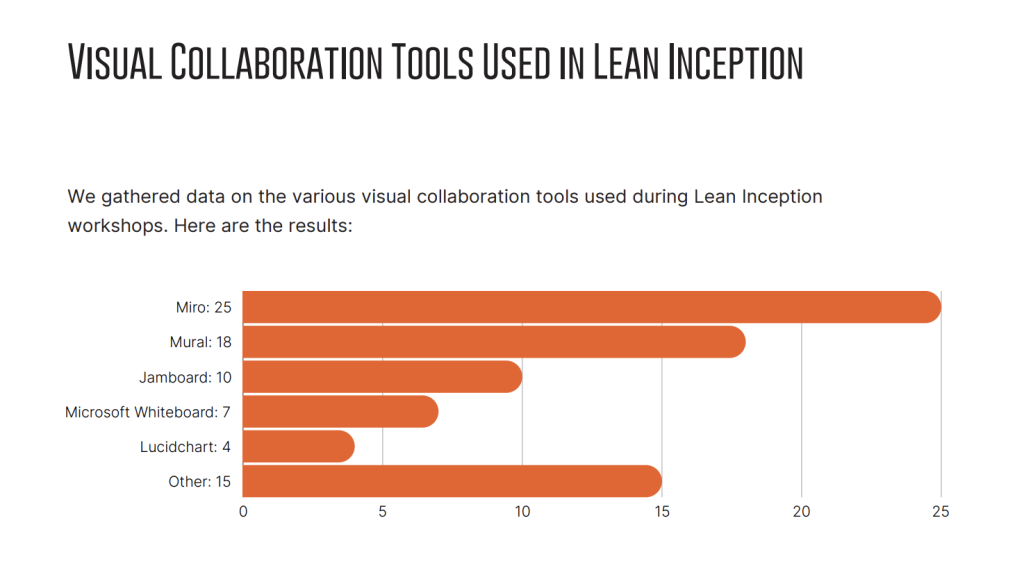
The report found that Miro is the most frequently used online collaboration tool during Lean Inception workshops, with 25 participants selecting it as their preferred platform. Other popular tools included Mural (18 participants), Jamboard (10 participants), and Microsoft Whiteboard (7 participants). This finding highlights how the right collaboration tools can enhance the Lean Inception experience, ensuring effective participation and alignment, regardless of location.
This is just one of several key findings from the report that showcase the tools, processes, and best practices used during Lean Inception workshops. Download and read the full State of Lean Inception Report.
2. Significant Participation Across Large Organizations
The report revealed that Lean Inception is widely used in medium to large organizations. 28.24% of participants were from organizations with 500 to 5,000 employees, and 25.88% came from organizations with more than 5,000 employees. This demonstrates Lean Inception’s scalability and relevance across different organizational sizes. Interestingly, small organizations, with fewer than 50 employees, also had notable participation (12.94%), showcasing the versatility of Lean Inception across varying company sizes.

3. High Rates of Repeat Workshop Participation
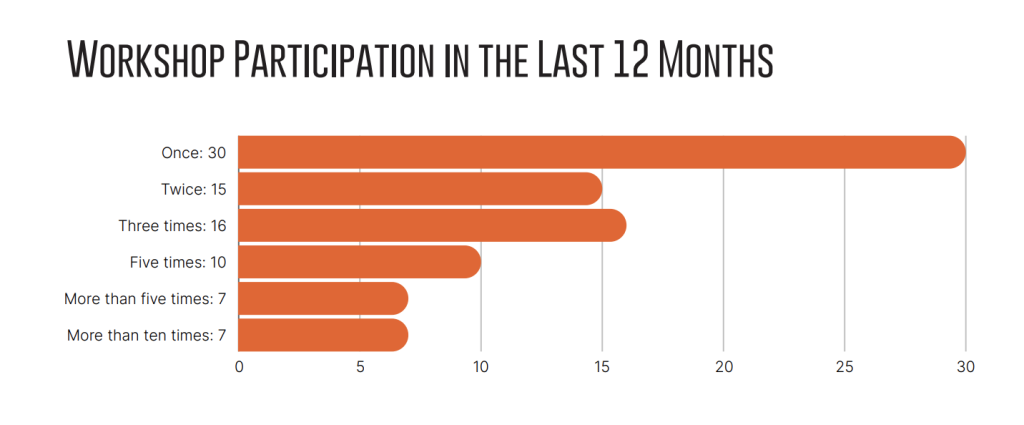
The data showed that a substantial number of participants had attended Lean Inception workshops multiple times over the past 12 months. 53 participants reported participating in more than one workshop, with 14 participants attending more than five times, and 7 participants attending more than 10 workshops. This finding emphasizes the value teams see in the continuous use of Lean Inception, suggesting that the methodology is not only effective for initial MVP creation but also beneficial for ongoing product alignment and iterative development.
Check all the findings in insights on the full report here.
The Challenges: Areas for Improvement
Despite the clear benefits, the report also identifies several challenges that organizations face when adopting Lean Inception. Addressing these issues will be key to improving the methodology’s implementation and outcomes.
1. Convincing Stakeholders
One of the recurring challenges is convincing stakeholders of the value of Lean Inception. Many participants noted that gaining stakeholder buy-in for the workshops can be difficult, particularly when time or budget constraints are involved. This suggests a need for better communication and demonstration of the ROI that Lean Inception can provide.
2. Time Constraints
Another challenge is the time investment required to run an effective Lean Inception. Although the methodology is designed to be completed in a short timeframe, teams often find it difficult to carve out the necessary time amidst other priorities. To address this, organizations may need to explore flexible scheduling options and invest in better planning to ensure the workshops can be conducted without disruption.
3. Cultural Barriers
For teams operating in diverse or global organizations, cultural barriers can impact the effectiveness of the workshops. Differences in communication styles, decision-making processes, and collaborative expectations can hinder the flow of the workshops. As Lean Inception continues to expand internationally, there will be a need for facilitators to be more aware of these cultural factors and adjust their approach accordingly.
Recommendations for the Future
The insights from the State of Lean Inception Report 2024 offer several actionable recommendations for organizations looking to implement or enhance their Lean Inception practices:
- Invest in Training: As demonstrated by the high success rates among certified participants, organizations should prioritize Lean Inception training and certification for all relevant team members. This will ensure that everyone involved in the workshops understands the methodology and can contribute effectively.
- Leverage Digital Tools: With hybrid and remote formats becoming more common, teams should continue to embrace digital collaboration tools. Platforms like Miro and Zoom can help maintain engagement and productivity, even when participants are working remotely.
- Focus on Stakeholder Communication: To overcome resistance from stakeholders, teams should prepare clear communication plans that highlight the value and ROI of Lean Inception. Case studies and real-world success stories can be particularly helpful in illustrating the potential benefits.
- Explore AI Integration: While the use of AI in Lean Inception is still emerging, organizations should begin exploring how AI tools can be integrated into the workshop process. AI can enhance brainstorming and decision-making, allowing teams to generate more innovative solutions.
Conclusion: A Bright Future for Lean Inception
The State of Lean Inception 2024 report paints an optimistic picture of the methodology’s growing influence and effectiveness. As Lean Inception continues to expand into new industries, integrate advanced technologies, and adapt to changing work environments, its role in driving successful product development is only set to increase.
By embracing the insights and recommendations outlined in this report, organizations can optimize their Lean Inception practices and continue to deliver valuable, user-centered products that meet market needs with speed and agility.
For more details and insights, you can download the full State of Lean Inception Report 2024 [here].