

The abyss by Geoffrey Moore

TAG:

In 1991, Geoffrey Moore wrote a book called Crossing the Chasm: Marketing and Selling High-Tech Products to Mainstream Customers.  In his book, Moore explains the abyss for the technology adoption curve. He says that among the early adopters (enthusiasts) and the early majority (pragmatics) there is an abyss that many products can’t cross. This happens because the pragmatics need good references for buying a new product and the enthusiasts usually are not the best reference. Hence the difficulty of some products for crossing this abyss.
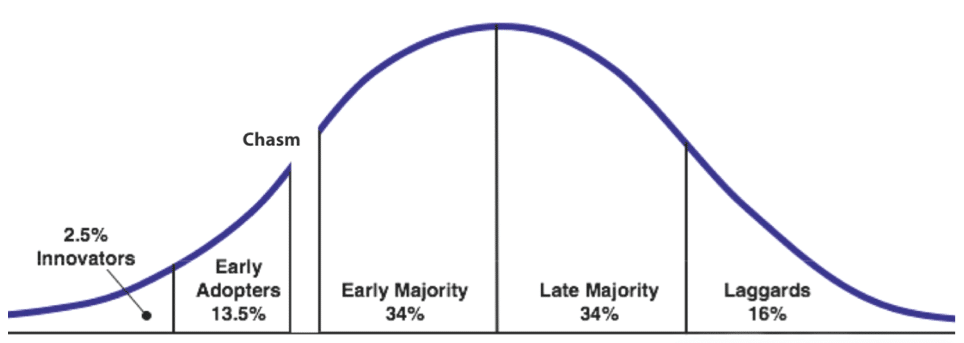
chasm

The abyss described by Moore shows one out of two ways possible for the software product:

  • It is not going to cross the abyss: the company can’t get its product to go beyond the enthusiasts and, consequently, will not have clients to guarantee its survival. This is one of the reasons that many startups close their doors prematurely.
  • Mature: your product is going to work and the company will eventually make to the top of the S-curve, and will decelerate until some other product comes up to replace yours.

Read more about the strategies for crossing the abyss on this amazing book: Product management, delight your customer with your software.
Paulo Caroli

Paulo Caroli is an author, speaker, and consultant specializing in agile transformations, Lean Inception, and OKRs. With over 30 years of experience—including nearly a decade in Silicon Valley and 18 years at ThoughtWorks—he has helped organizations transition from project to product and from strategy to execution. Creator of the Lean Inception methodology and author of bestselling books like Lean Inception and Team OKR, Paulo is dedicated to empowering teams to align, validate, and deliver real business value.
Triple Track Development: Business Innovation Through Continuous Discovery and Continuous Delivery

Triple Track Development: Business Innovation Through Continuous Discovery and Continuous Delivery

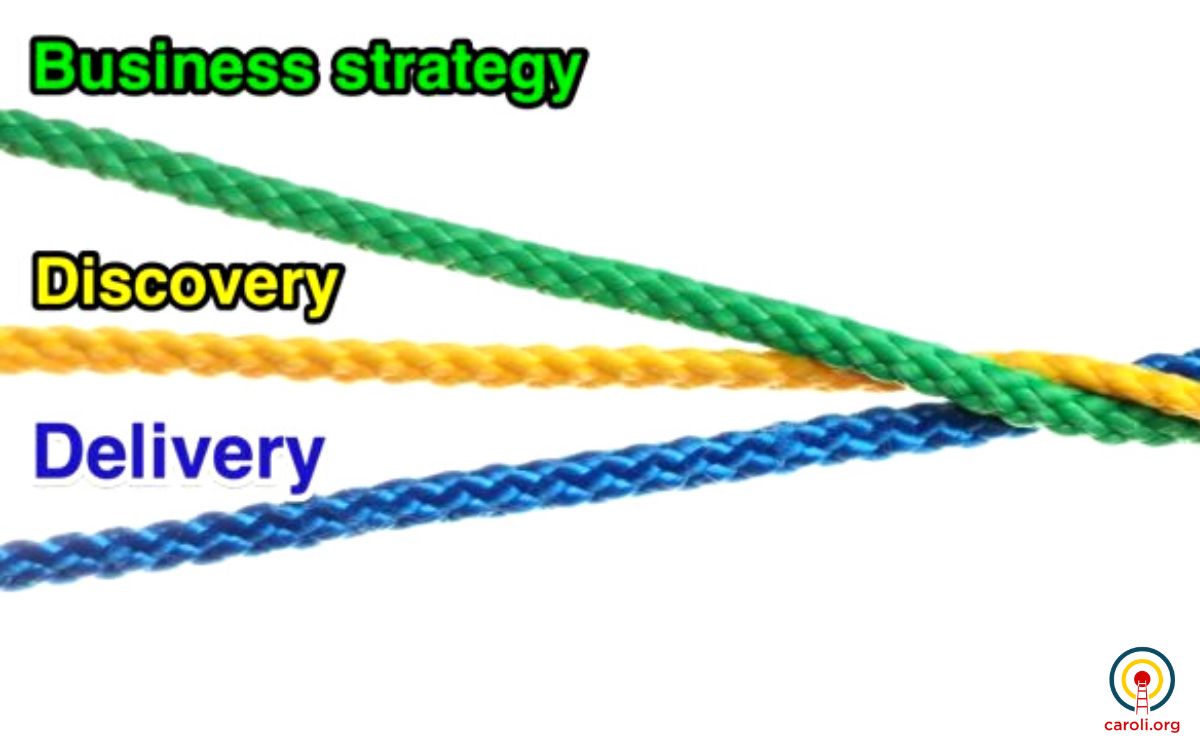
Continuous Triple Track Development, comprising Business Strategy, Discovery, and Delivery, revolutionizes product development. Quarterly goals replace yearly plans, ensuring adaptability. Continuous Discovery delves deep into user needs, while Continuous Delivery swiftly transforms validated ideas into products. This synchronized approach fosters unprecedented collaboration, propelling teams towards collective success. It’s not just a methodology; it’s a strategic advantage, enabling businesses to innovate rapidly in today’s dynamic market.

read more
New Book Alert: How to Define, Prioritize and Refine User Stories using the Product Backlog Building Canvas

New Book Alert: How to Define, Prioritize and Refine User Stories using the Product Backlog Building Canvas

Introducing our enhanced book, “How to Define, Prioritize and Refine User Stories using the Product Backlog Building Canvas.” Evolving from its predecessor, this edition responds to valuable reader feedback, refining both content and title. Delve into the world of effective product development and user story management, discovering the integrated power of the PBB Canvas. Embrace an enriched reading experience and explore insights from thought leader Jeff Gothelf in the preface. Don’t miss a reader’s insightful review, preserved for wider readership. Join us on this journey of empowering user story craftsmanship, and witness the transformation of your product development goals.

read more
Product thinking strategy questionnaire

Product thinking strategy questionnaire

The questionnaire below elaborates on a few important aspects of product thinking, problem understanding, solutioning and strategic delivery planning.   I have used this questionnaire as part of a workshop on Product Leadership and Strategic Alignment. Basically,...

read more

Pin It on Pinterest