
I am a very experienced facilitator. About 90% of my experience is on face-to-face workshops. But I already had a lot of experience with remote facilitation.
Thoughtworks has always had many distributed teams. So, many times, I have helped some distributed teams with inceptions or other collaborative workshops, remotely.
But, in the last two months, the remote facilitation has been my day to day.
I’m learning faster than I can share. So I will not wait until I have all consolidated learning to share (like I did with the Lean Inception content). I will share as soon as I have something that can be reused (and help other facilitators).
When I structured the book Lean Inception, I tried to keep it lean. So I left a lot of text related to the subject of the book on pages and posts on my website. In the book, I refer to those pages and posts.
This worked well. In addition to the book being leaner, I have been able to review the text on facilitation techniques. I managed to adjust it in a way that makes sense for both face-to-face and remote inceptions.
Check out the Facilitation Techniques page, now with a review including the context (and more learning) on remote inceptions.
A very important tip: The specific tools help a lot (for example. Mural as the remote wall, Zoom for videoconferencing and FunRetrospectives for icebreaker activities). There are a lot people sharing how to use remote tools. But, the biggest challenge today is to apply facilitation techniques, very effectively, to the reality (and challenges) of remote workshops.
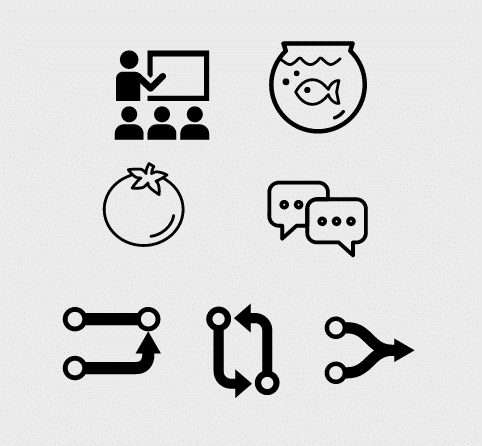
Decide whether and when to apply each of these facilitation techniques. Consider it for each activity in your collaborative workshop.
Reflecting on these workshop facilitation techniques helps me to prepare Lean Inceptions and other remote workshops. I hope it helps you too, and you have great success on your remote workshops.